


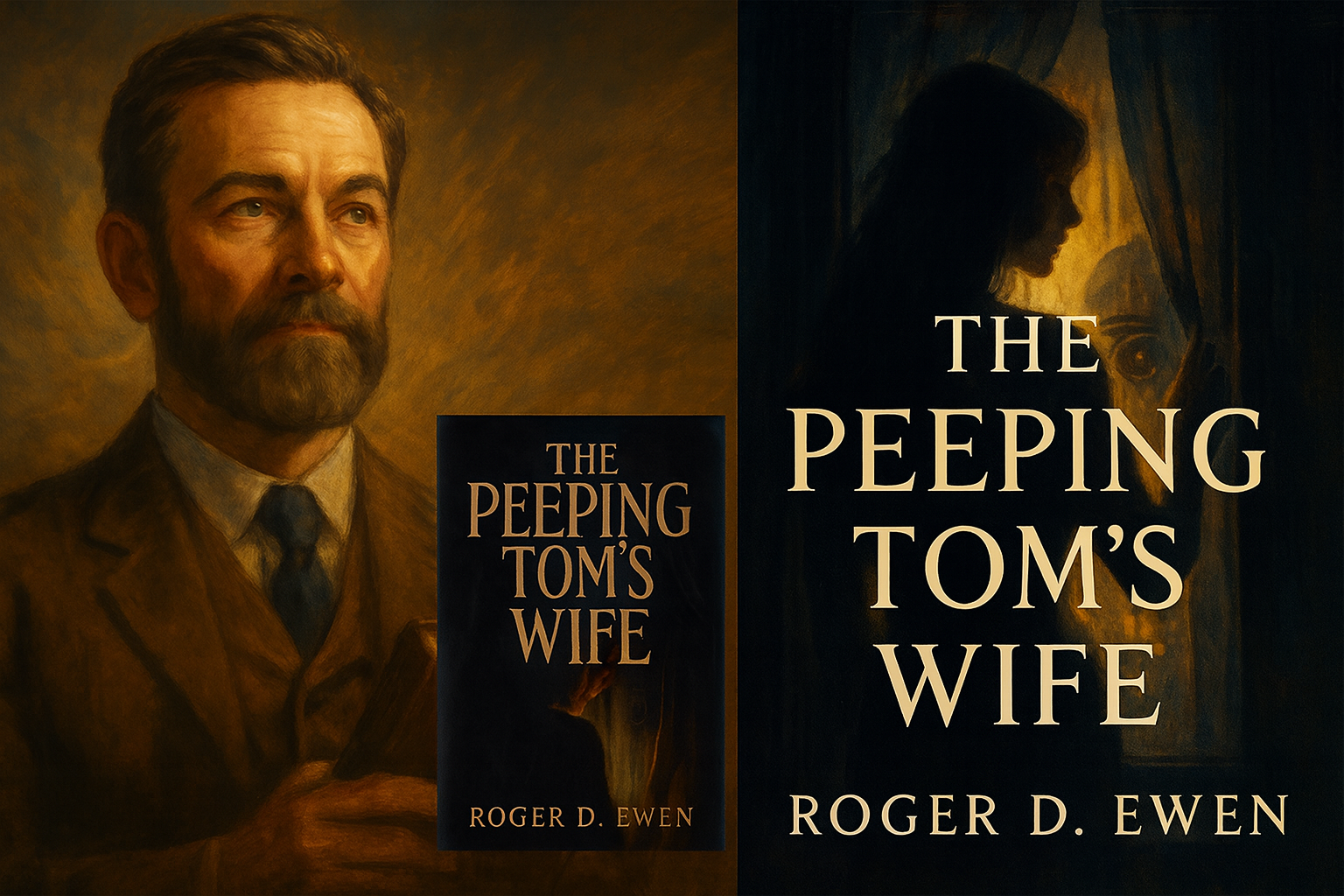
The history of publishing is indeed full of success stories. At the same time, it is full of cautionary tales of authors who have succeeded under one system only to be disheartened by the next. But there are also pioneers – the writers who see the industry disruption as a worthwhile opportunity instead of a threat.
Roger D. Ewen is one of those names. He didn’t just write a book. He tactfully dismantled the traditional barriers that have held a lot of authors back. This turns initial skepticism and professional challenges into a definite blueprint for success. He is a book writing pioneer success story.
How well did Roger D. Ewen do?
Roger D. Ewen’s journey wasn’t marked by overnight luck. It was defined by tactful persistence, a fierce commitment to quality, and a calculated mastery of the new digital marketplace. In an era where many authors still waited for permission from gatekeepers, Mr. Ewen radically chose self-reliance.
We will learn more about the step-by-step methodology that defined Roger D. Ewen’s success story. This post will also explore the critical junctures where Mr. Ewen made unconventional choices, ranging from genre selection to direct-to-reader marketing. The way he made a profitable author legacy will also be explored.
A bit about Roger D. Ewen’s Author Journey
Known to be the creative force behind the book “The Peeping Tom’s Wife”, Roger D. Ewen is an author who is not afraid to enter the shadowy corners of human relationships. He was born in Saskatoon, Saskatchewan, and was raised across various towns in the Canadian province of Ontario.
Mr. Ewen’s journey into book writing is a story in itself. From struggling with English in school to discovering a hidden talent for storytelling, a teacher’s encouragement helped plant a seed that, despite being dormant for years, came to life later on.
Roger D. Ewen is recognized for not only crafting literary works but also for his tactful authorship, especially in an industry where the landscape is shifting. By mastering the intersection of quality writing with artistic features and digital commerce, he has become known as a book-writing pioneer.
Mr. Ewen’s success wasn’t rooted in traditional channels. Rather, it rested in his early adoption of self-publishing methodologies that emphasized professional-grade production and data-driven marketing.
Moreover, Mr. Ewen demonstrated in effective terms how an author can achieve significant commercial and critical success, especially by controlling their story’s lifecycle. In turn, it helped him set a high standard for independent authors who sought to build a sustainable and lasting legacy.
About his book, The Peeping Tom’s Wife
Roger D. Ewen’s book “The Peeping Tom’s Wife” is a story about a career-oriented woman, Gisele, who is curious about her husband’s peculiar and deviant behavior. On certain evenings, that behavior led her into an unimaginable world.
Her husband is a photojournalist, and his assignments bring him into contact with intriguing individuals. Gisele finds herself drawn deeper into his secretive world.
What she discovered has a dark side. Gisele is entangled in blackmail, and the complex web of relationships her husband navigates is also concerning. Through her eyes, readers are taken on an exploration of personal desires and human sensuality. Her character is revealed in depth, showing why she accepts the truths coming to light.
Book Writing Pioneer Success Against the Odds – Roger D. Ewen’s blueprint for modern-day authorship
No doubt that Roger D. Ewen is a Book Writing Pioneer Success Story. His success hinges on one core concept: the modern author must be able to embrace the full author lifecycle. This helps transform an author from a writer to the owner of their own literary brand.
In the past, success meant a large-scale publishing deal. Nowadays, it has a new definition, meaning total ownership and control over production, marketing, and distribution. This is where Mr. Ewen realized that the odds authors needed to overcome were outdated. In short, the slow systems of traditional publishing were becoming irrelevant.
What was his strategy?
Roger D. Ewen’s strategy was to invest heavily in the quality and professional packaging of his books to ensure they met or exceeded traditionally published standards. This high-quality approach is now mandatory for any author seeking true self-publishing success.
He focused on critical areas often overlooked by starters. Among them are securing top-tier developmental editing and hiring worthwhile book cover designers. This helps remove the major red flags deterring readers. The approach is a proactive and hands-on approach that has control over each step of the process.
This is the foundation for creating a sustainable and profitable author career. Those who want to achieve this level of success must treat their self-published book as a high-value product.
The key pivots of Roger D. Ewen – his stepwise approach
Roger D. Ewen’s tactful persistence can be divided into three key actionable steps any author can follow to improve their chances of being successful in the world of self-publishing literature:
Hyper-targeted niche identification
Instead of writing broadly, Roger D. Ewen meticulously identified sub-genres in his field that were underserved. This allowed his books to instantly dominate smaller categories on Amazon, helping them secure a low Best Seller Rank (BSR) faster, compared to competing in overly saturated mainstream genres. This is essential for triggering the algorithm.
The mandate of professional production
Mr. Ewen mandated that each element of his book must look indistinguishable from a major publishing house title (ranging from the cover typography to the interior formatting). This means investing wisely in a dedicated book-writing service to help guarantee flawless execution. It is a crucial step for creating reader trust.
Using data-driven marketing instead of luck
Roger D. Ewen treated marketing as a science. He ran Amazon Ads and social media campaigns continuously. The resulting data was used to optimize his keywords and audience targeting. Moreover, he also focused on measurable return on investment (ROI) instead of relying on luck to boost book sales.
The result of his efforts – the velocity effect
One of the most compelling and important demonstrations of Mr. Roger D. Ewen’s strategy: his implementation of a unique phenomenon known as the “velocity effect.”
What he did was tactfully align a top-quality cover, optimized metadata, and coordinated a proper and worthwhile price promotion. This helped his books achieve a rapid yet concentrated surge in sales in almost 72 hours.
This sudden phenomenon is known as sales velocity, and it triggered Amazon’s robust internal recommendation system (the ‘Also Bought’ section). The outcome? An exponential boost in organic visibility lasted for months, which propelled his works to reach the top of multiple niche carts. This demonstrates the importance of strategic execution in dictating success on Amazon.
Roger D. Ewen’s wisdom for authors
Roger D. Ewen did not achieve success by luck. He believed in strategic alignment and avoiding common author pitfalls.
First, let’s discuss what authors should avoid: they should not rely on do-it-yourself (DIY) and other shortcuts for designing book covers and editing manuscripts. They are the signs that indicate an amateur wrote the book. It will flag the book as low-quality literature. This is a mistake that prevents algorithmic promotion and kills trust quicker than anything else.
The second thing they must avoid is launching their book with the hopes that readers will be able to find it. Authors need to work on the metadata and ads themselves, even if they want organic reach.
Now we will discuss what authors must do. First, they should treat their publishing process as their own business. Meaning, their book is their means of self-employment. They should focus on improving their return on investment (ROI) by investing in professional book editing and cover design services.
Each dollar spent on quality packaging translates directly into readers’ trust and long-term sales velocity.
Secondly, once they have published their book, they must prioritize data-driven marketing. They need to continuously test their Amazon ad keywords. The resulting insights can help them refine their book’s metadata.
Lastly, authors must define their hyper-targeted niche before writing. This helps ensure market dominance in the beginning. Authors also understand what they should write. This prevents them from competing in heavily saturated book categories. Once all steps are implemented correctly, authors can hence become the book writing pioneer success story.
Conclusion
Roger D. Ewen did not just become a success overnight. He understood the underserved areas of his field’s subgenre and decided to work on them. Using Amazon ads with the right keywords and metadata helped him promote his book among the desired audience, thus ensuring that he was able to make a good profit on his book.
No self-published author should overly rely on luck. They must try to promote their book by themselves. Following the steps taken by Roger D. Ewen can help them overcome obstacles and become a Book Writing Pioneer success story.
Frequently Asked Questions (FAQs)
Q: What was Ewen’s biggest strategic pivot?
A: He shifted from relying on traditional gatekeepers to mastering the digital commerce side of publishing, becoming the CEO of his own author brand.
Q: What challenges did Roger D. Ewen face on his writing journey?
A: Roger D. Ewen found out it was not viable to rely on luck to promote his book. He also found out that investing in top-tier editing and design was necessary to ensure his books were visually and structurally sound and readable, too.
Q: Did Ewen rely on luck for success?
A: No. He focused on data-driven marketing and strategic pricing to generate sales velocity, effectively forcing the Amazon algorithm to promote his books.
Q: Why was Book Writing Pioneer the best choice for Roger D. Ewen?
A: Book Writing Pioneer helped Roger D. Ewen discover the underserved areas of his genre’s subgenres. Then he also found out that strategically marketing his book was more preferable instead of relying on luck.