


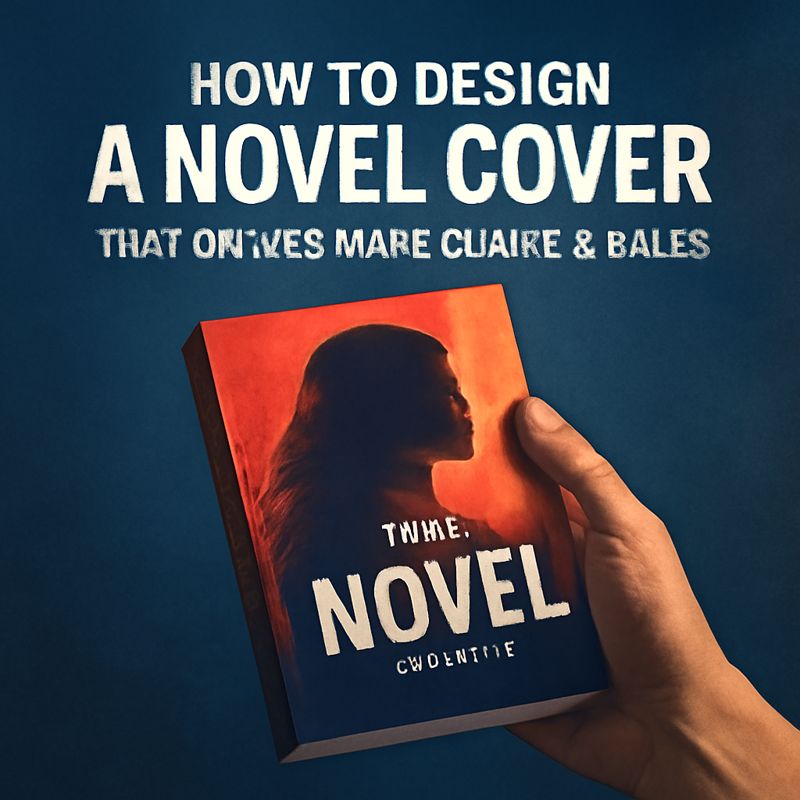
Numerous novelists approach cover design as something that is either a formality or a purely artistic exercise. This leads them to prioritize aesthetics that reflect their personal vision. The approach is the quickest route to commercial failure.
The digital marketplace is very competitive. The book’s cover has one job and one job only: To work as a very efficient sales engine, convincing a browsing reader to click the thumbnail instead of the ten competing titles next to it. If the book cover is not able to turn clicks into sales, it is a bad cover, irrespective of how good it looks.
How to design a novel cover? That is something we will find out in this blog post.
How can book covers designed for conversion be made?
Designing for conversion requires a tactical shift in focus. This indicates an understanding that the cover must be a genre signal first and foremost. Meaning, it should be able to communicate quickly whether authors are selling a cozy mystery, an epic fantasy, a relaxing humor book, or a high-stakes thriller.
Failure to signal the book’s genre indicates that the book will have a very low click-through rate (CTR).
How can this blog post help?
This blog post will serve as a brief and systematic guide that can explain the commercial approach to a novel’s cover design. It will detail the essential elements (ranging from title’s legibility in thumbnails, to color psychology, and genre-specific tropes) that professional designers use to boost CTR and sales velocity.
The book’s cover is not a mere work of art. It is a robust marketing tool that can convince people to buy the book.
A book’s cover is quite important
They may say “Never judge a book by its cover,” but in all honesty, books are judged like that. Let us now examine the reasons why such is the truth:
Creating worthwhile first impressions and marketability
A book’s cover is like a handshake of sorts. It is the author’s introduction to a potential reader. Like most first impressions, it counts. A captivating cover can certainly catch the eye and make a prospective reader stop scrolling. It can even prompt a second glance in a shop window.
It is easy for readers to overlook books if they have a cover that is cluttered, confusing, or outdated, irrespective of how compelling their inner content can be.
Whether or not readers consciously analyze a book’s cover, they are making decisions about the book’s quality, professionalism and value it holds. A book’s cover can raise the chance of someone picking it up, reading it, and taking it to the checkout counter for purchase.
It helps communicate a book’s essence
The book’s cover also works as a visual summary. It should give just enough leeway to draw people in without revealing the story straightaway. Each design element should work together, especially colors, imagery, layout, and typography. This helps readers quickly and easily understand what the book is about.
The clearer the cover’s communication, the more confident readers will feel in making a purchase.
Understanding the genre-specific aspect of book cover design
The genre-specific aspect of book cover design can help in recognizing genre tropes. Each genre comes with its own set of visual expectations. This allows readers to identify the kind of story they are looking for.
For instance, designing a romance book cover can include soft colors, close-up photography, and flowing fonts. In contrast, illustrated covers, serif typography, and otherworldly symbols are typical of fantasy books.
These familiar visual cues can help books by authors sit comfortably alongside those of others in the book’s respective category. This is how the average cost for a book cover design is optimized and controlled.
How to design a book cover? – examining the book cover design process
A simple misstep in designing a book’s cover is indeed bad news. It can torch the author’s credibility and will create a cover worse than pre-designed covers.
Yet there is good news. A little bit of effort can help anyone create a professional-looking book cover and answer the question ‘how to design a novel cover.’ Let us now examine those steps that can help authors put their book in the right direction.
Beginning with a ‘bestseller swipe file’
The bestseller swipe file is basically a personal collection of 10-20 book covers in the author’s subgenre. They are bestsellers with the top-class visual appeal. They can be checked in Amazon’s top 100 in the author’s preferred genre (cozy mystery, urban fantasy, fantasy, dark romance, etc.).
Recurring color palettes, fonts, layout patterns, and emotional vibes can be seen. This will become the design baseline. Authors will confuse prospective raiders if their book’s cover design does not share at least 70% of these visual cues.
Choosing the main image
Authors usually think in characters and scenes. But the cover’s main job is simply telling certain readers that the book is for them. Alternatively, it can compel them to read the book. This is the reason a robust main image is needed.
Here is what they should actually do:
- Sticking with one dominant focal point. For instance, a person or a couple for fiction, and a clear symbol for non-fiction books.
- Using a combination of multiple images requires carefully blending them to match colors and lighting.
- Using a high-resolution stock image or 3D renders is better compared to using pixelated free images that make the book look low-quality.
Professionals advise authors and designers alike to check stock photos’ statuses for commercial use. An unlicensed image means taking down the book and its cover.
Choosing a bold and clear color scheme
Giving the color scheme some thought works wonders. Those who find themselves facing a color crisis should remember that most of the time, simpler is safer. A bold red background with basic white text usually looks more professional compared to a half-baked swirl of various colors.
Making good use of the right fonts
Fonts are quite easy to get right if authors know what they are doing. They can be done wrong if they are not picked up correctly. This is where a book cover template comes in handy. Revisiting the swipe file works. If most of them had chunky and blocky fonts, then authors can do just that. If they are capitalizing author names at the bottom, that can work too.
Adding in background layers
Layering the fonts in a professional and aesthetically pleasant manner works. The background, focal point, and title text each have their layer in Canva, Photoshop, and other tools. It helps add layers effectively to the book’s cover.
Testing the cover at thumbnail size
Indie covers rely on thumbnail readability for boosting sales. The cover should be shrunk to around 100 pixels on the screen. It should be legible, along with the central image. Flat modern cover aesthetics are better looking in thumbnails.
Conclusion
Novel covers desire to be designed correctly. Authors wondering how to design a novel cover should no longer worry or despair. This blog post can help them understand how to make one and work with designers to make one that resonates with the audience.
Frequently Asked Questions (FAQs)
Q: What is the most critical element for high sales conversion?
A: Genre Signaling. The cover must instantly and accurately communicate the book’s specific genre (e.g., sci-fi, historical romance) to the right audience.
Q: Why is thumbnail legibility so important?
A: Most sales happen on mobile devices. The title and key imagery must be clear and readable even when reduced to a 300×450 pixel thumbnail size.
Q: What is the average cost of a professional book cover design?
A: The average cost of book cover design is variable. Freelance designers cost less than $200 while experienced onces cost between $500 and $1500.
Q: Should my cover match my competitors?
A: Yes and No. It must use the same genre tropes (colors, fonts) to signal category, but be distinct enough to stand out visually in the search results.
Q: How much does a book cover cost for different genres?
A: It depends. DIY cover design costs $200 at max, whereas experienced freelancers charge up to $80,0 and companies charge up to $8000.
Q: What color strategy drives strong emotional results?
A: Use genre-appropriate color psychology. For instance, high contrast blues/oranges for thrillers, or soft pastels/warm tones for contemporary romance.